
I'm a perfectionist
When you make art with people, you also make connections. When I’m working at Springfield Care Home, making connections is one of the most important parts of the activity.
I recently met a new resident called Pauline. She is a very lovely, positive person. She particularly likes drawing cute animals and when she first attended, she started by drawing a lion cub. She would look at it and say how adorable it was. I gave her some tracing paper and a pencil and invite her to just draw the outline around the lion cub. She says ‘Yes but that’s cheating.’ I replied that it wasn’t cheating and that we were just going to enjoy drawing without worrying about the quality of it. She understood and proceeded to spend a lot of time on the detail. As she drew she’d say things like ‘It’s so hard to draw, it just takes a lot of practice.’ After her saying this a few times, I asked her if she had made art earlier in her life, and she’d say no. She would say things that made me feel like she knew what it took to make a good drawing. I asked her if she had a degree and she said she did but when I asked her what it was, she couldn’t remember. She would just repeat ‘it’s hard to get it right, it just needs practice.’
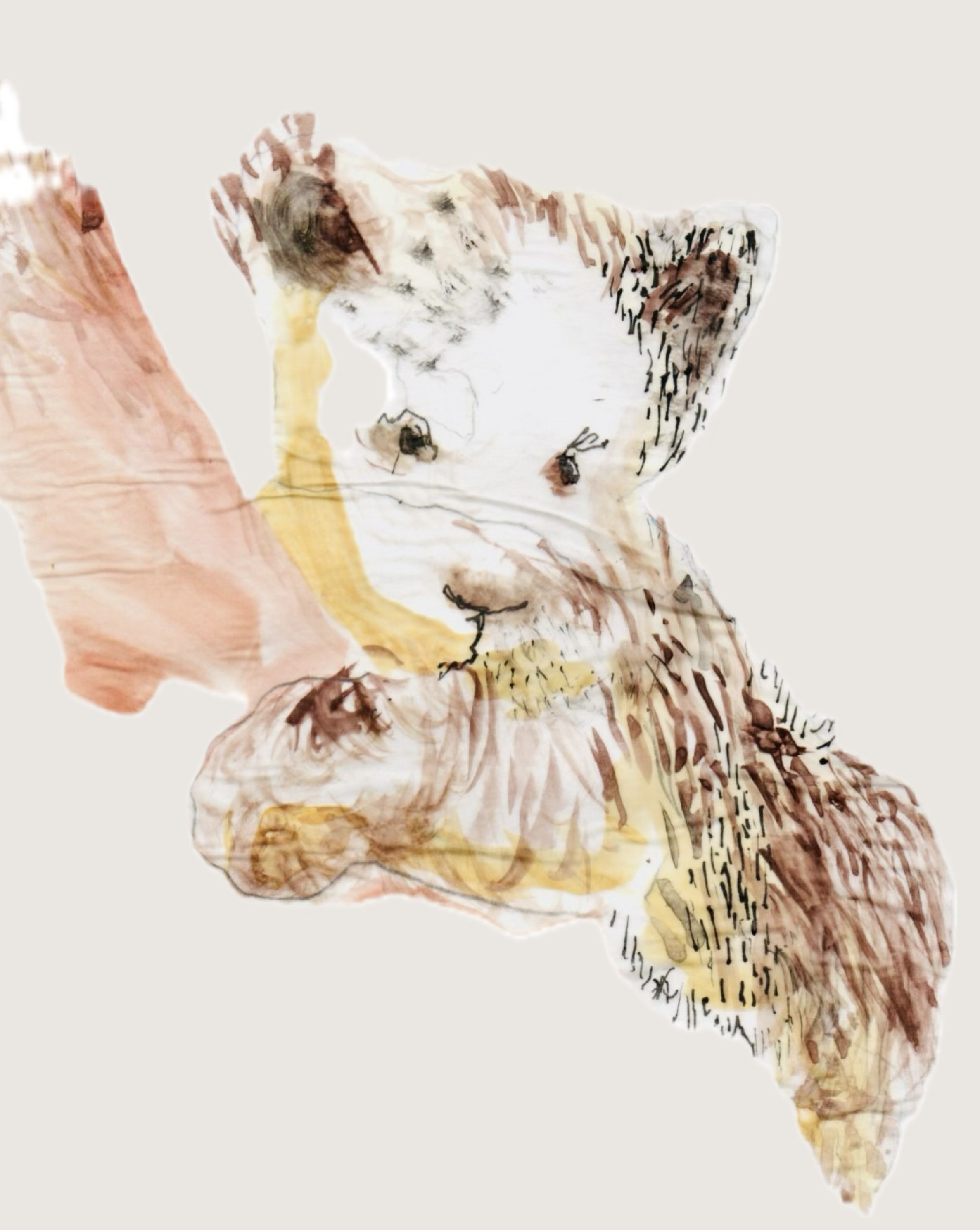
After about three weeks of drawing the lion cub and me trying to help her remember what degree she did, her son came to visit. He told me that she did an Art History degree and that she used to do China painting (the blue willow motifs on plates) and that she also taught it.
I knew it! I knew she was connected to art making in her life, and I was determined to make deeper connection. I thought it might be a good experience for her if I printed out some willow patterns and she could have a go on a plate, just for fun. So I prepared the materials and took them to her. I explained what we could do and she participated by outlining the birds from the willow patten onto a china plate. The second time I went, I had the intention of finishing the plate with her but her reaction was not what I expected.
I showed her what we had done and told her the next steps. She must have been particularly lucid that day or what I had prepared had triggered something inside of her because she was reluctant to continue.
As she started, she explained to me that the nib on the posca pen was too thick and it needed to be finer. I replied that the nib was already fine but we were just playing and it didn’t matter. She agreed and then stared again to outline the birds with the pen and she said, ‘It’s too thick, you need a fine brush’. I repeated that we were just playing and she agreed and then she just put the pen down and said ‘We need a really fine brush, this is too thick, Im a perfectionist you see.’ She said ‘Im a perfectionist and shouldn’t be made to do things’. I recognised what she was saying, she was really saying ‘I’ve spent years perfecting my craft and I’m not doing your crappy posca pen willow project.’ I thanked her for honesty and acknowledged her experience and skill that the project was indeed not good enough.
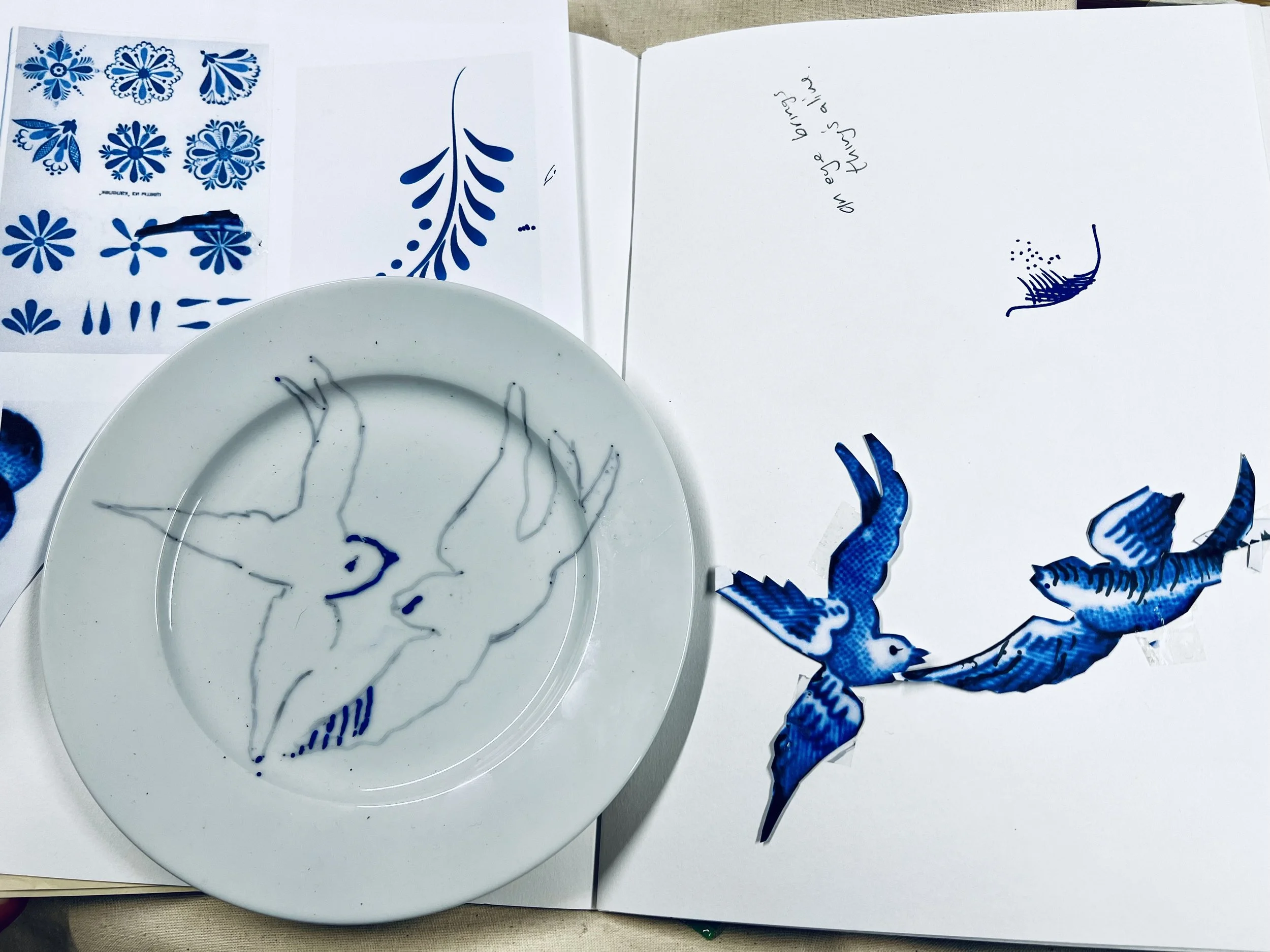
I felt that in that moment, she had a felt sense of her experience and it was activated by the images of the china plate motifs, the feel of the ceramic plate, the dark blue colour of the pen. She knew what practice was, she knew her standard was higher than what she was doing and she wasn’t happy about it.
Sometimes the phrase ‘Im a perfectionist’ is used by people who struggle to start a drawing activity. They use it as a way of saying, ‘Im not going to start because it won’t look right.’ If it won’t turn out as good as they imagined they don’t even try. We all imagine our output before start and it can be disheartening if things don’t match up with how we imagined them to be. What Pauline was saying was different than this.
Mistakes, problem solving and practice are all fundamental to art making. I think Pauline knew what this was, she was past the initial stages of playing about, she had gone through it already. She had practiced and made her work good and she knew her standard.
When people suffer with dementia, they often loop in conversations, and repeat information. Pauline loves looking at my tattoos, they are old and going blue/black under my skin. She always asks me about them, she wants to talk about each one. My tattoos are also motifs and motifs are what she painted on her plates. I probably shouldn’t make un-scientific correlations like this, but I feel humans are deeply connected to the images they have stored in their minds, and art making opens opportunities to connect these images with shared meaning. Recently there has been a decline in Pauline health and Pauline doesn’t interact like she has done in the past. Im really grateful to work with people like Pauline, who help me understand art in all it’s infinite facets.